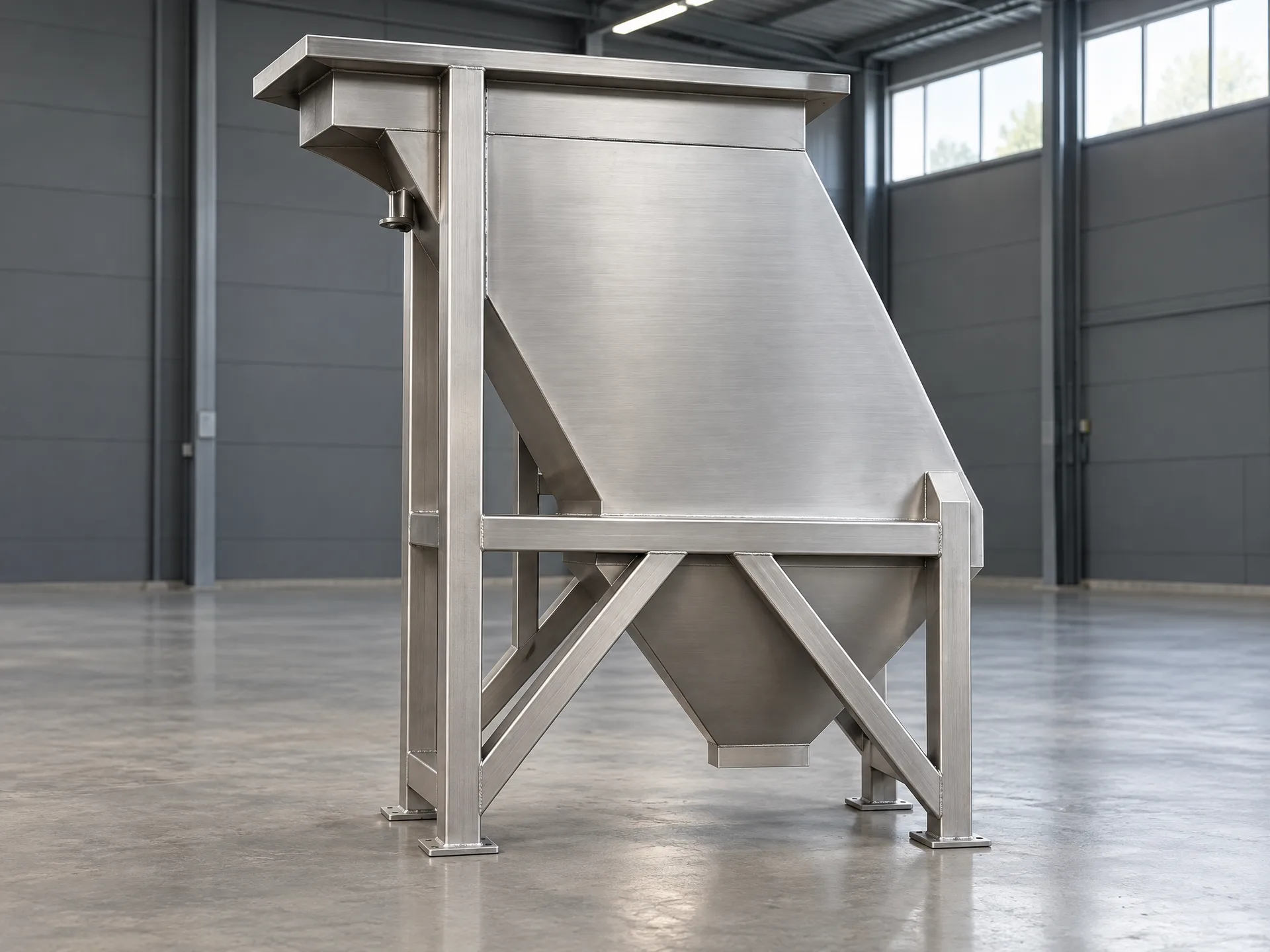
Plate Settler Settling Area
The Foundation of Every Sizing
The required projected settling area follows directly from the design flow and the target surface loading rate. Inclined plates then deliver that area within a fraction of a conventional footprint.
Plate Settler Settling Area
The projected settling area is the horizontal area available for particles to settle onto. For a plate settler it is the sum of the horizontal projections of every inclined plate — which is why a compact unit provides so much effective area.
Start from A_required = Q / SLR to find the total projected area needed, then divide by the projected area of a single plate to obtain the plate count.
The projected area of one inclined plate equals its length × width × cosine of the inclination angle — the steeper the plate, the smaller its horizontal projection but the better its self-cleaning behaviour.
A_required = Q / SLRTotal projected settling area required [m²].
A_plate = L × W × cos(θ)Projected area of one plate; θ = inclination angle (typically 55–60°).
N = A_required / A_plateNumber of plates (rounded up).
Geometry
Free Sizing Check
Try the interactive Plate Settler Sizing Calculator, or send us your flow and water-quality data for a preliminary sizing at no cost.
Key Considerations
Angle Trade-off
Steeper plates project less area but shed sludge better — 55–60° balances both.
Spacing
Closer spacing packs more area in but raises fouling risk with heavy solids.
Safety Factor
Apply 1.2–1.5× to the calculated area for real-world robustness.
Request an Engineering Assessment
Our engineers will review your application, flow rates, and water quality data to recommend the optimal plate settler configuration.