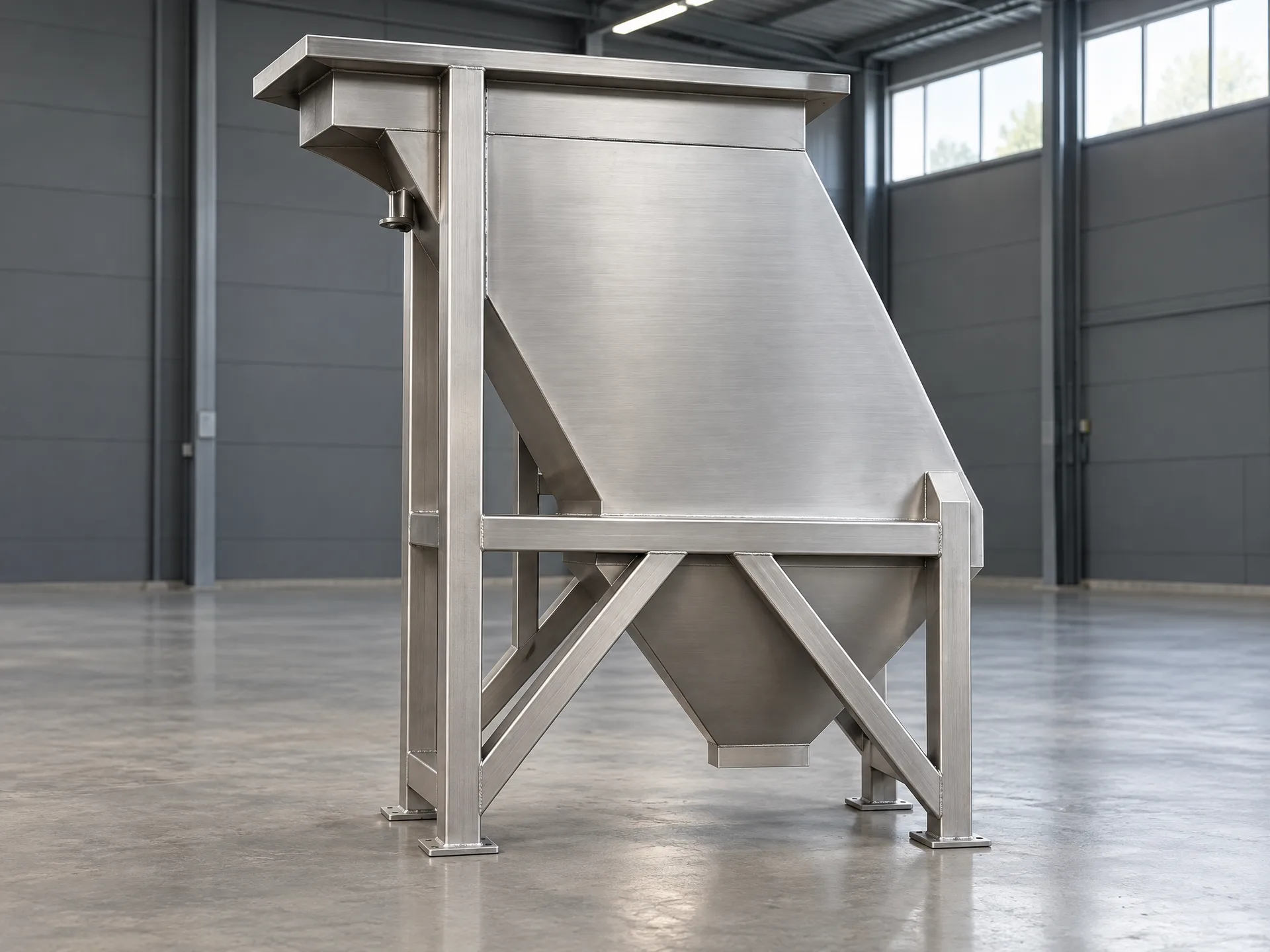
Plate Settler as a Secondary Clarifier
Compact Separation of Activated Sludge
Plate settlers can serve as high-rate secondary clarifiers downstream of activated sludge, separating mixed liquor in a fraction of the footprint of a conventional final clarifier.
In the activated sludge process, mixed liquor from the aeration tank must be separated into clarified effluent and settled biomass — part of which is returned to the reactor (RAS) and part wasted (WAS). Traditionally this is done in large circular final clarifiers.
A plate settler can perform this secondary clarification at a much higher rate, saving significant footprint. Because activated sludge flocs settle readily (subject to good sludge volume index), the inclined plates capture them efficiently while thickened sludge collects in the hopper for return and wasting.
Attention to sludge blanket level, SVI, and return rate is essential; R+F sizes the settler around your mixed-liquor characteristics.
Engineering Considerations
High-Rate Clarification
Separates mixed liquor in far less space than a conventional final clarifier.
RAS / WAS Handling
Thickened sludge collects in the hopper for return and wasting.
SVI Sensitivity
Good sludge settleability (SVI) is important; bulking sludge needs process control.
Request an Engineering Assessment
Our engineers will review your application, flow rates, and water quality data to recommend the optimal plate settler configuration.