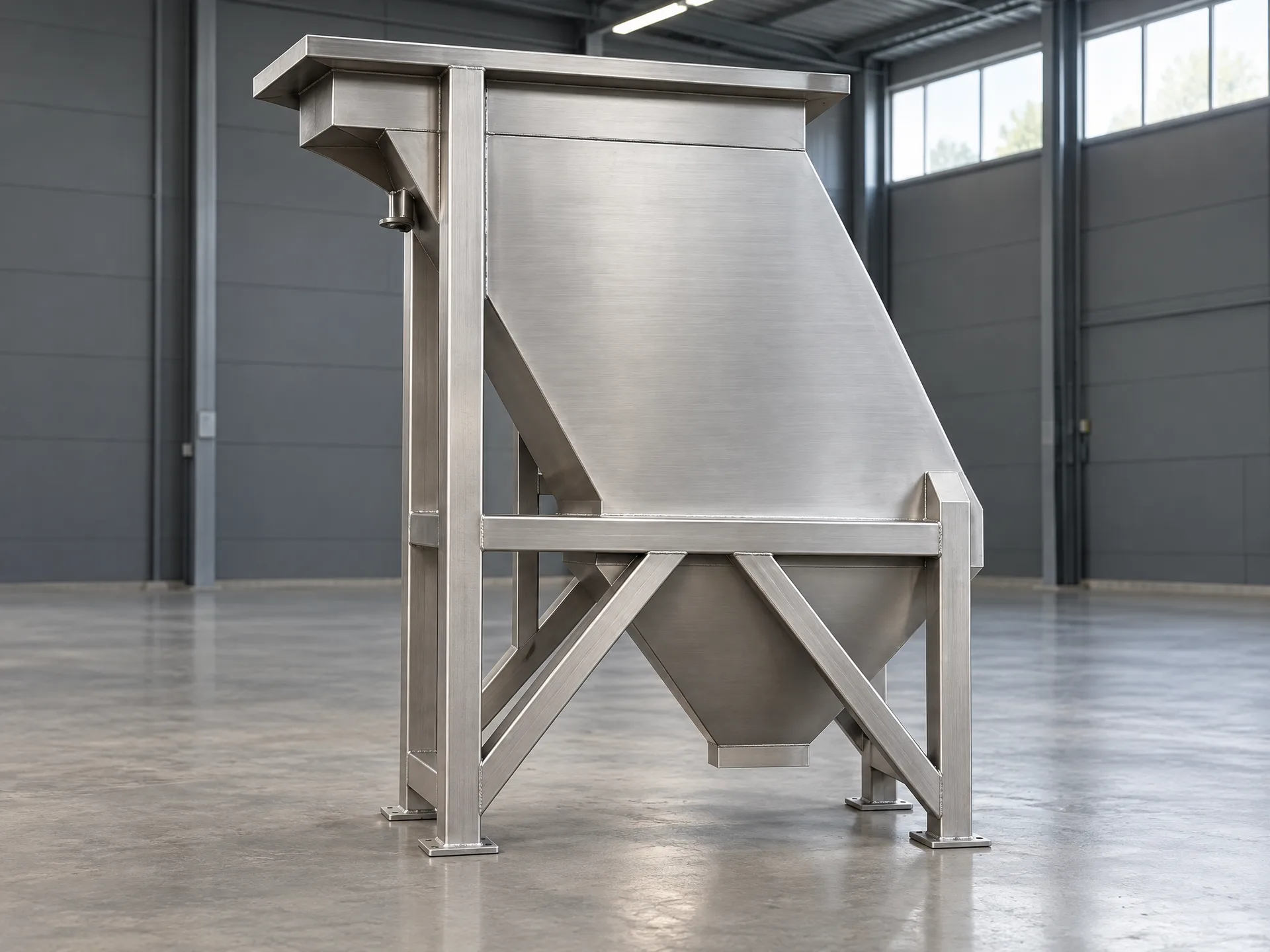
How Does a Plate Settler Work?
The Working Principle of Inclined Plate Sedimentation
Plate settlers leverage the Boycott effect — the observation that particles settle faster on inclined surfaces — to dramatically accelerate the sedimentation process in a compact footprint.
The Settling Process Step by Step
The plate settler process is based on shallow-depth sedimentation theory. By reducing the vertical distance a particle must travel to reach a settling surface, inclined plates achieve the same or better removal efficiency as conventional clarifiers in a fraction of the space.
Influent Distribution
Raw water or wastewater enters the plate settler through an inlet distribution system designed to ensure uniform flow across the entire width of the settler. Proper flow distribution is critical to prevent short-circuiting and ensure all plates receive equal hydraulic loading.
Inclined Plate Settling
Water flows upward between the inclined plates (55–60°). Suspended particles settle onto the plate surfaces due to gravity, following the Boycott effect. The inclined plates provide a dramatically increased effective settling area — up to 10x more than a conventional clarifier of the same footprint.
Sludge Collection
Settled solids slide down the inclined plates under gravity into sludge hoppers at the bottom of the settler. Sludge is periodically or continuously removed via pumps, hydrostatic pressure, or mechanical scrapers, depending on the system design and application.
Clarified Water Discharge
Clarified water rises to the top of the plate pack and exits through overflow weirs or collection channels. The treated effluent typically achieves TSS levels below 10–20 mg/L, depending on the application, coagulant dosing, and inlet water quality.
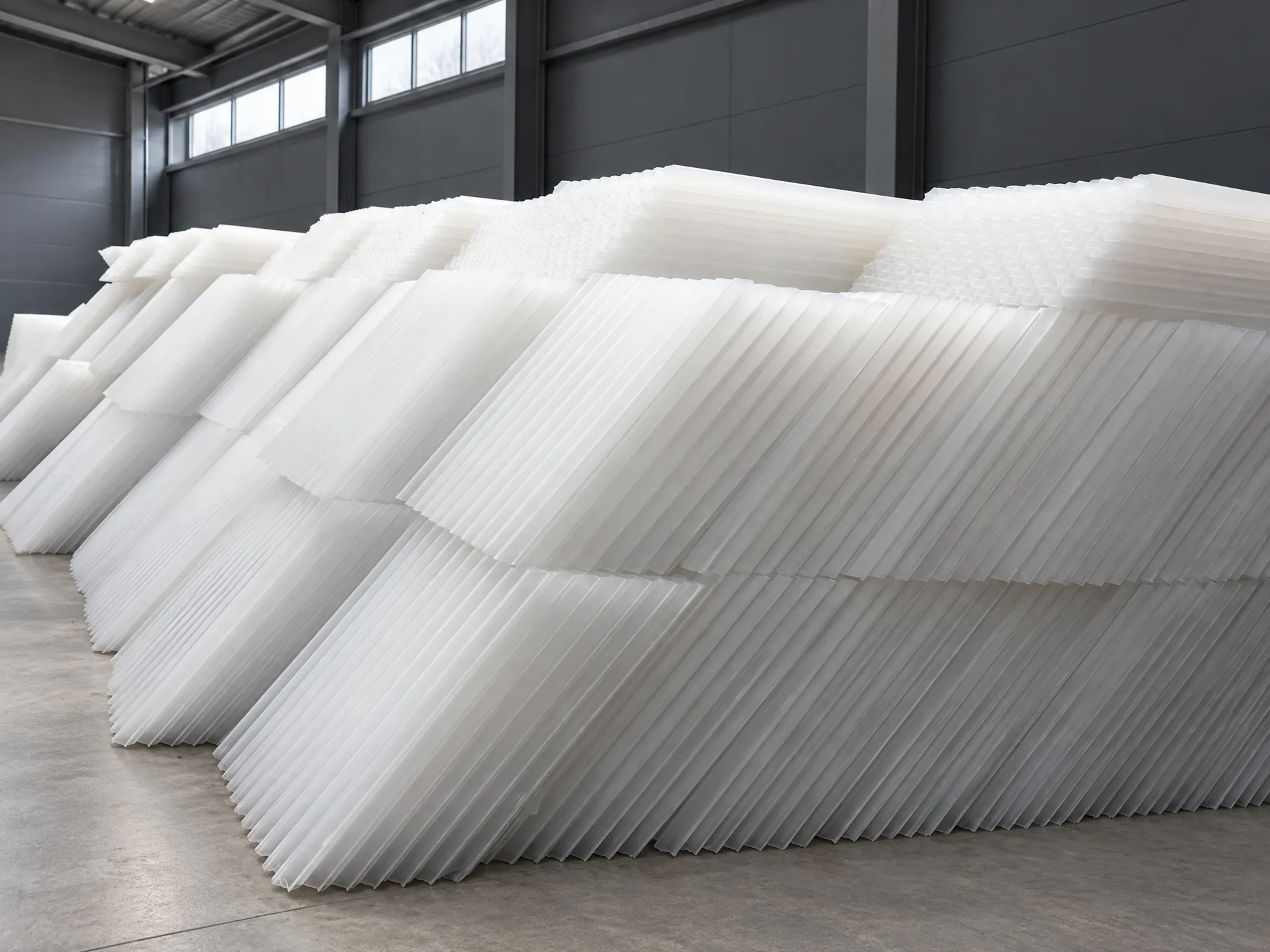
The Inclined Plate Pack
The heart of every plate settler is the plate pack — a stack of closely spaced, corrugated inclined plates. The narrow channels between plates create the shallow-depth settling zones that make the Boycott effect so effective, while the corrugated profile guides settled solids downward into the sludge hoppers.
The plate media itself is typically made from polypropylene (PP) or PVC for excellent chemical resistance and a self-cleaning surface, while the tank, frame and housing are built from stainless steel. Plate spacing, inclination angle and total plate area are matched to each application, so a compact footprint delivers the effective settling area of a clarifier many times its size.
The Boycott Effect
In 1920, A.E. Boycott observed that particles in a suspension settle significantly faster in inclined containers than in vertical ones. This occurs because the inclined surface provides a shorter settling distance for particles, while the downward sliding of the settled layer continuously clears the plate surface.
In a plate settler, this principle is applied systematically: a stack of closely spaced inclined plates multiplies the effective settling area by a factor proportional to the number of plates. The result is equivalent clarification performance in a dramatically smaller footprint.
Key Design Equations
A_eff = N × L × W × cos(θ)
SLR = Q / A_eff [m/h]
v_s = (SLR × sinθ) / cosθ
Request an Engineering Assessment
Our engineers will review your application, flow rates, and water quality data to recommend the optimal plate settler configuration.