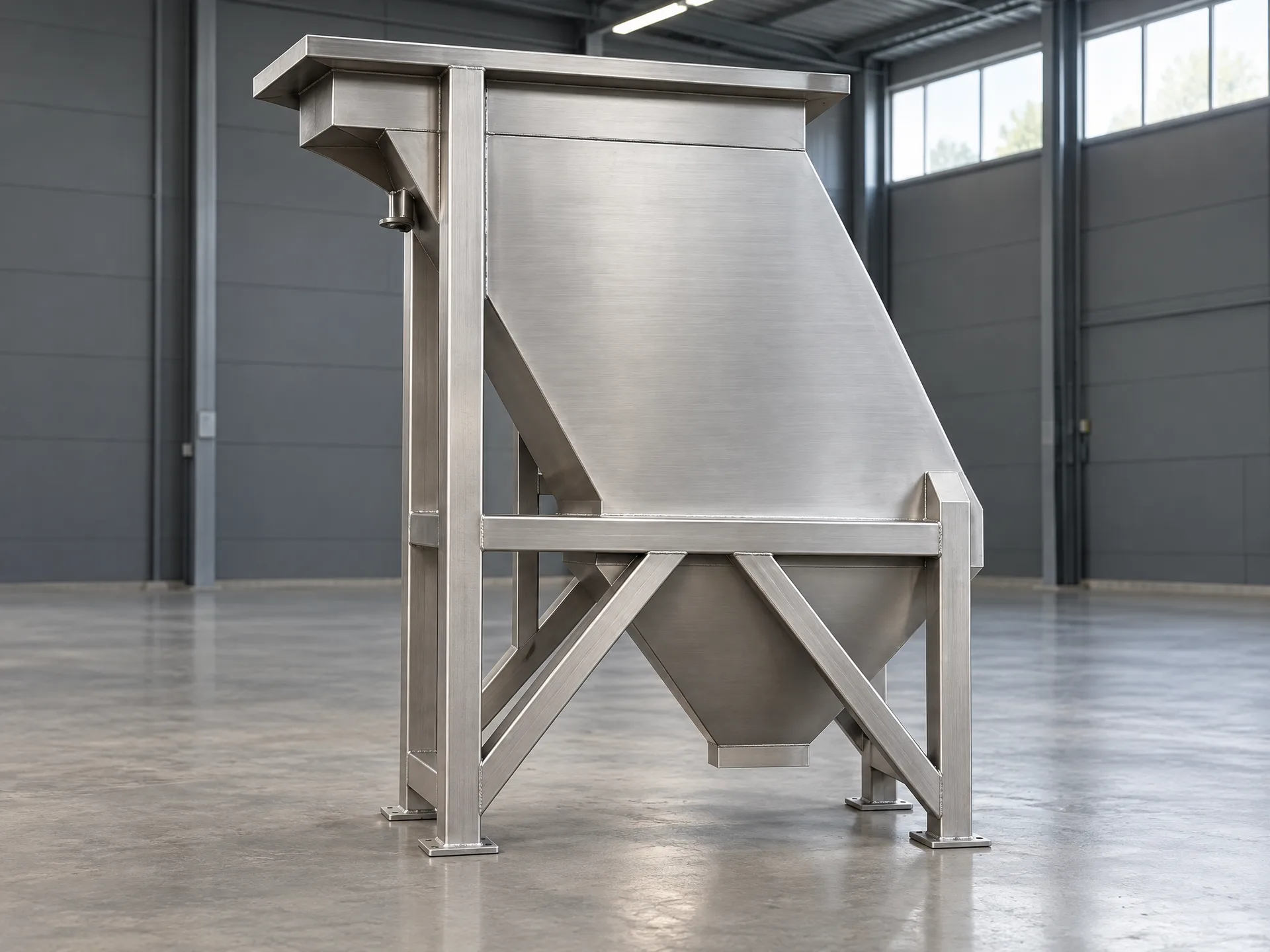
Plate Geometry
Angle, Spacing & Length
How plate angle, spacing, and length define the effective settling area and self-cleaning behavior of inclined plate settlers.
Plate Geometry
The geometry of the inclined plate pack — angle, spacing, and length — determines both the effective settling area and the ability of settled sludge to slide down the plates under gravity.
A plate angle of 55–60° balances two competing needs: a shallower angle maximizes projected settling area, while a steeper angle ensures reliable self-cleaning as sludge slides to the collection hopper. Spacing sets the distance a particle must travel and the resistance to clogging.
Plate length governs the residence time available for particles to reach a plate surface. Together these parameters are optimized for the specific solids, loading, and clarity requirements of each application.
A_eff = N · w · L · cosθA_eff = effective settling area; N = number of plates; w = plate width; L = plate length; θ = inclination from horizontal.
Design Reference
Design Notes
Angle Trade-off
Steeper aids self-cleaning; shallower maximizes settling area.
Spacing
Closer spacing adds area but raises clogging risk with heavy solids.
Rigidity
Stainless steel plates stay flat and true over long service life.
Related Pages
Request an Engineering Assessment
Our engineers will review your application, flow rates, and water quality data to recommend the optimal plate settler configuration.